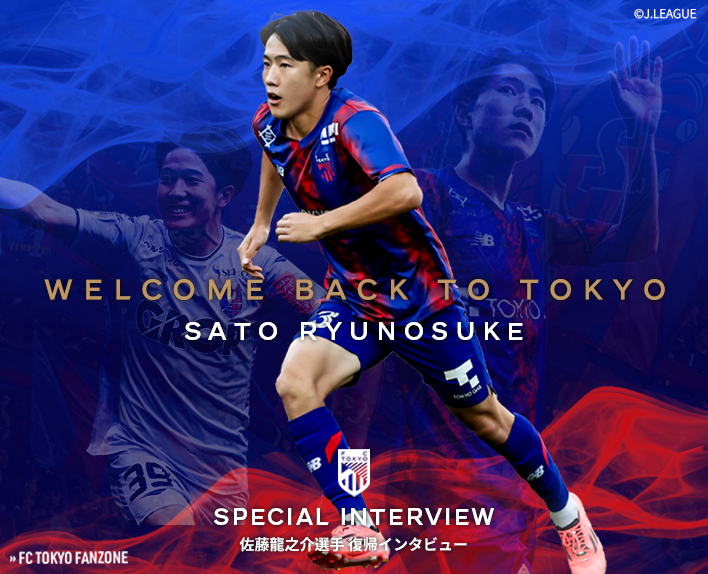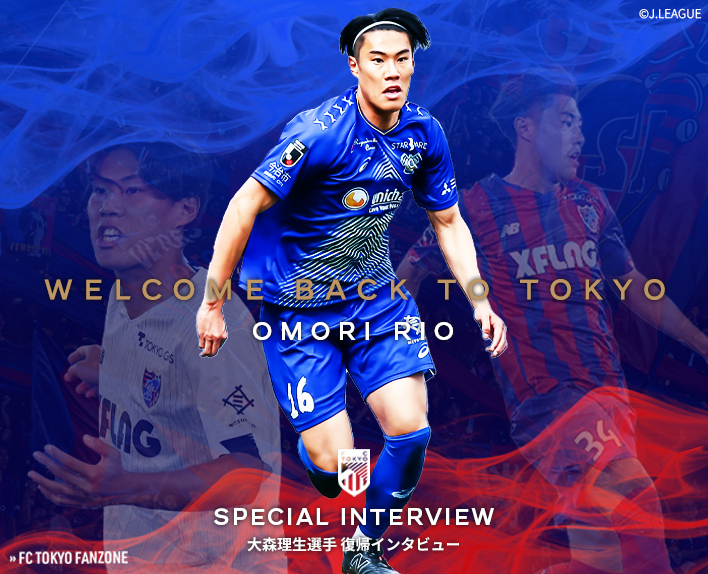


After four seasons, he has returned to Tokyo.
The time spent continuing to fight in a distant place has surely strengthened himself, and the experience gained has become solid confidence.
However, this return is not the goal but the starting line. Carrying the match sense and experience cultivated in the J2 League, along with an undiminished hunger, he once again wears the blue and red emblem.
Q. How do you honestly feel now about being able to return after about four seasons?
A. Over these four years, I truly had a variety of experiences. Of course, there were tough seasons, but there were also seasons where promotion to the J1 League seemed within reach, finishing in 2nd or 3rd place. In that sense, I think these four seasons were very fulfilling. Although it took a little time, being able to play again in Tokyo, the club I have been with the longest since I was a child, honestly makes me very happy.
The four seasons on loan felt short in terms of experience, but when I think about my career, I believe it was a very significant event. Having been away from Tokyo for so long, it’s not something you can easily come back from, and this return feels like "finally standing at the starting line." Just because I’ve come back doesn’t mean I’ve succeeded or accomplished anything yet, so I see this as still a milestone along the way.
In fact, I have seen many players who went on loan from Tokyo to other clubs and then continued their careers at different clubs, and I have seen such announcements every off-season. In that context, I feel glad that I have stayed true to myself. I believe there are players currently out on loan to other clubs as well, but if I return to Tokyo and become a leading presence, it will set a precedent that "you can come back and succeed again." I have a strong desire to prove that.

Q. Of course, you have experience playing in the J2 League and have appeared in over 100 matches. Which part do you feel you have grown the most in?
A. I think you can see the improvements in my technical skills and physicality when you watch me play. Through my actual league match experiences, I have gone through various situations—games where no matter how hard everyone worked, we still couldn’t win, and matches where despite everyone putting their bodies on the line and staying focused, we conceded goals in the last five minutes repeatedly. On the other hand, speaking of the 2025 season with FC IMABARI, there was a period of 13 matches from the start without a loss. It’s hard to put into words, but I felt many times throughout the season the atmosphere of possibly conceding or successfully defending, even though it was a different category. I believe these are things that can only be cultivated through match experience.
Q. Rather than technical skills, do you feel that your game control and ability to read matches have been developed?
A. Of course, the technical aspect was also a very significant experience for me, having played for four teams and worked under various coaches, team styles, and with different teammates. Each team has its own rules, and in terms of how to express my own play and bring out the best in myself and those around me, I feel that the range of my play has greatly expanded. I believe a good player is not one who can only play under a specific tactic, but one who can adapt to various tactics, coaches, and situations. In that regard, I think I have acquired something very substantial.
Q. You appeared in almost every match for Iwaki FC and FC Imabari. How were these two seasons for you?
A. Both teams were within the playoff zone until midway through the season, so every match felt like a league game but with the intensity of a tournament. After each match, I immediately focused on the points and standings, constantly wondering "how big is the gap to the top?" and spent every game with that mindset. Being able to play in almost every match under such tension was very significant. In terms of fighting through the entire season, including maintaining my condition, I believe I became an important piece. There were many aspects where I could prove myself, which also boosted my confidence.
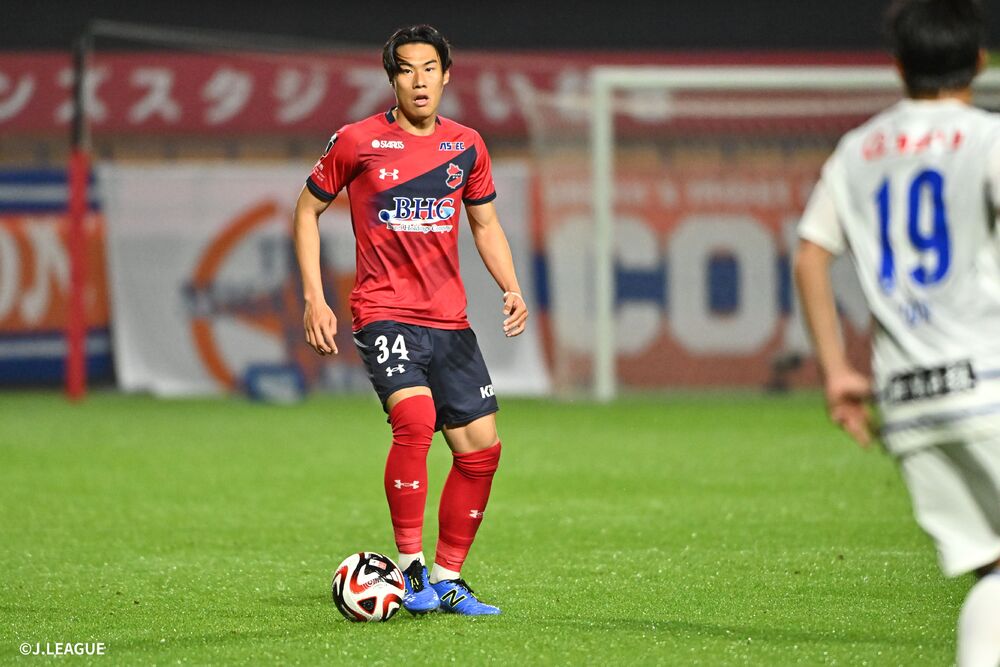
Q. Having experienced four clubs and returned to Tokyo, how do you want to establish yourself as a center back?
A. Although I was away for four seasons, I have been watching Tokyo’s matches all along. I believe there have been various changes while I was not there, and there are atmospheres within the team that you can only understand by actually being part of it. However, I also have the impression that the team has not been deeply involved in the title race. So, toward the club’s ongoing goal, I feel that by joining, I must make people think, "The team has accelerated." I want people to see that I have become very hungry since returning to Tokyo, and I want to push up strongly from below. Playing matches in Tokyo and aiming for the championship are not easy, but I believe I have gained experience over these four seasons for that very reason, and I am not willing to give that up.
Q. How do you perceive the soccer style that Rikizo MATSUHASHI aims for and the current style of Tokyo?
A. I think it is a team that constructively builds the game. Within that, I feel it is a style of soccer that wants to further enhance intensity, attacking power, and ideas. For me, it fits well stylistically in terms of solid defending, moving the ball, supplying it, and creating chances. I have experienced both fast-paced soccer and carefully connected soccer. I believe there are differences in sensation between watching from outside and playing on the pitch, but I think it is important to leverage my past experiences and absorb as much as possible.
Q, Omori's J1 League debut match was against Yokohama F. Marinos in the 2021 season (2021 Meiji Yasuda J1 League Sec. 35). How do the frustration and memories from that day connect to your current mindset?
A, Returning to Tokyo, I have the goal of playing on the J1 League stage again, and I also have a strong desire to face Yokohama FM once more and secure a solid victory. That match left me with a strong frustration that I really couldn’t do anything and that nothing changed even when I came on. I have gained experience from many matches and increased the areas where I can compete, but I also feel that the J1 League and J2 League are completely different competitions in terms of feel. In that sense, I am really looking forward to seeing how well my play will hold up in the J1 League.
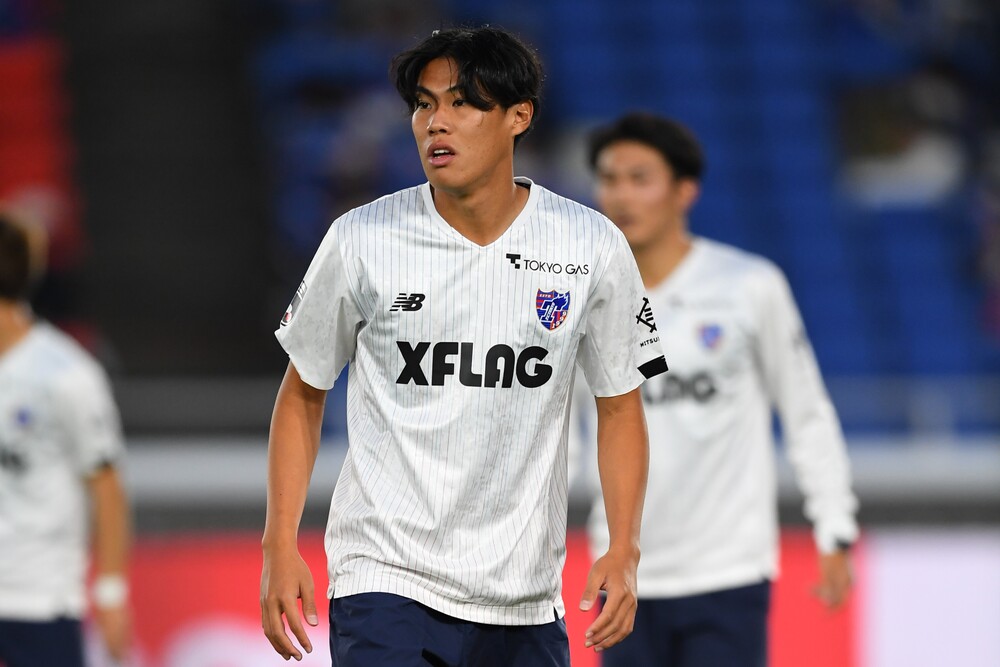
Q, Including those feelings, you want to show it on the pitch as soon as possible, right?
A, Since my return was decided, I have a strong desire to wear the Tokyo uniform and stand on the pitch. Returning to the familiar clubhouse and team is, in a way, refreshing for me. I am looking forward to carrying the Tokyo emblem on my back and fighting together with everyone to aim for the championship.
Q. After a long time, did you feel any nostalgia when you reunited with the staff and related personnel?
A. I was able to greet the staff who have taken care of me since my academy days, and once again, I felt that having the opportunity to show my play is very significant. I want to continue with a sense of responsibility and enjoyment, knowing that my play influences not only myself but also those around me.
Q. Please share your enthusiasm with the fans and supporters.
A. First, I want to focus on numbers and results, and clearly show my growth in a visible way. I believe that will definitely contribute to achieving the team’s goals. I’m also looking forward to fighting alongside the fans and supporters again after a long time, and I will do my best so that we can have many matches to celebrate together. Thank you for your support.